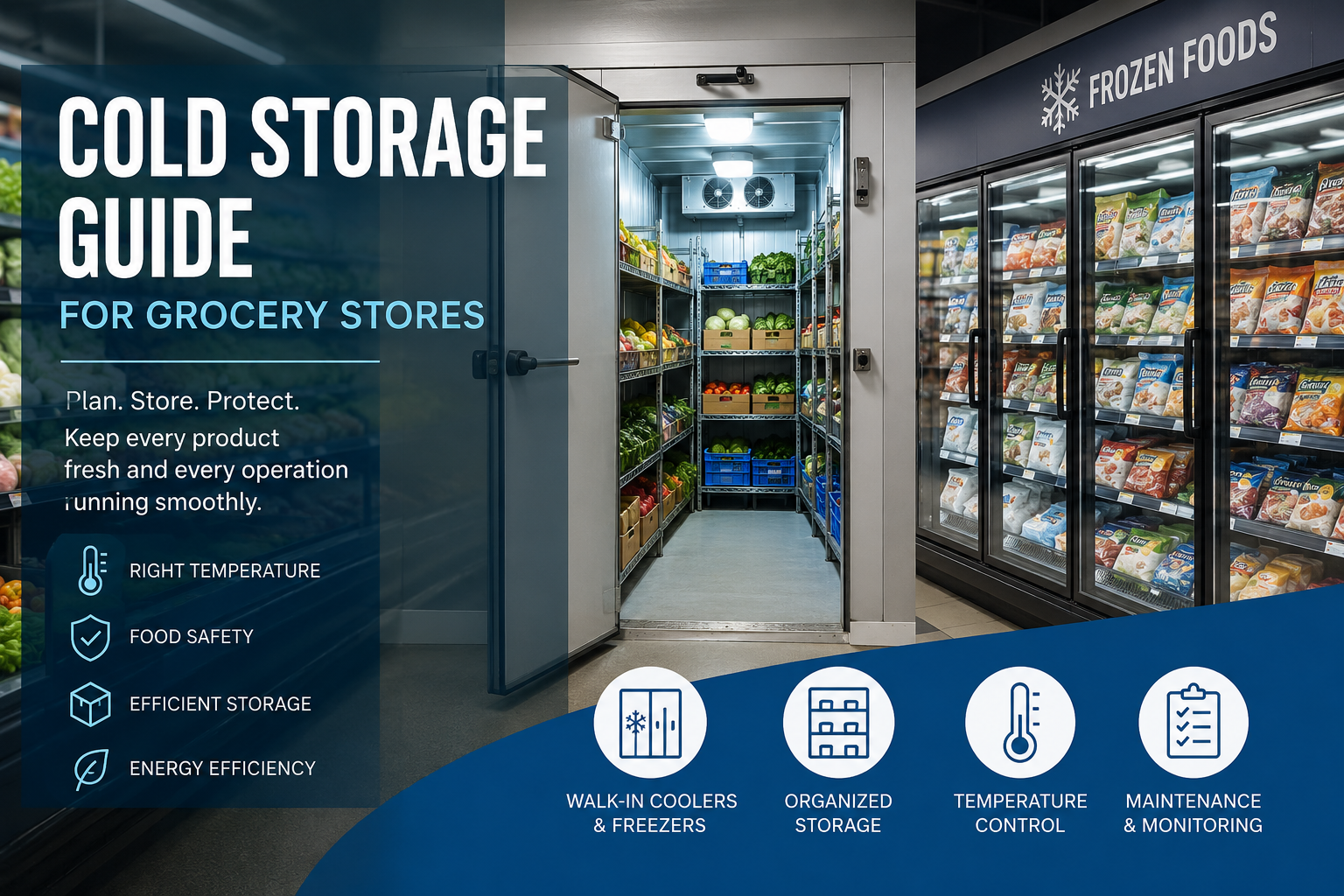
Cold storage is one of the most important systems inside a grocery store. Fresh produce, dairy, meat, seafood, frozen foods, prepared meals, beverages, and specialty products all depend on controlled temperatures to stay safe, sellable, and profitable.
For grocery stores, refrigeration is not just an equipment decision. It affects food safety, product quality, energy costs, store layout, customer experience, labor efficiency, and shrink control. A well-planned cold storage system helps a store protect inventory, reduce spoilage, maintain consistent merchandising, and support daily operations from receiving to display.
This guide explains how grocery stores can plan, organize, and maintain cold storage systems, including walk-in coolers, walk-in freezers, reach-in refrigerators, display cases, prep storage, and back-of-house refrigeration.
Why Cold Storage Matters in Grocery Stores
Grocery stores handle a wide range of temperature-sensitive products. Some items need refrigeration, some need freezing, and others need specific humidity or airflow conditions. Poor cold storage planning can lead to food waste, failed inspections, product loss, customer complaints, and higher utility bills.
Food safety is the first priority. The USDA recommends keeping store refrigerator at 40°F or below and freezers at 0°F or below for safe food storage. The FDA Food Code uses 41°F or below as the cold-holding standard for many time/temperature control for safety foods, often called TCS foods.
For grocery stores, this means cold storage areas should be designed not only to reach the correct temperature, but also to hold that temperature during real operating conditions: frequent door openings, deliveries, restocking, employee traffic, seasonal demand, and busy shopping hours.
Main Cold Storage Areas in a Grocery Store
A grocery store usually needs several types of refrigerated and frozen storage. Each area serves a different operational purpose.
1. Walk-In Coolers
Walk-in coolers are used for refrigerated back-of-house storage. They are common in grocery stores because they provide large, organized storage capacity for perishable products.
Common grocery store uses include:
- Dairy storage
- Fresh produce storage
- Meat and seafood holding
- Deli ingredients
- Prepared foods
- Beverages
- Floral products
- Backup inventory for refrigerated display cases
Walk-in coolers are especially useful when a store receives large deliveries or needs to hold products before moving them to the sales floor. Instead of relying only on reach-in units or display cases, grocery stores can use walk-in coolers as a central refrigerated storage hub.
A grocery store may need more than one walk-in cooler if different departments require different storage conditions. For example, produce often benefits from different humidity and airflow conditions than packaged dairy or meat.
2. Walk-In Freezers
Walk-in freezers are used for bulk frozen storage. They are important for grocery stores that sell frozen foods, ice cream, frozen meat, seafood, prepared meals, bakery items, or bagged ice.
A walk-in freezer is usually a better option than multiple small freezers when the store needs high-volume frozen inventory storage. It allows employees to organize cases, rotate stock, and replenish display freezers more efficiently.
Walk-in freezers are commonly used for:
- Frozen grocery inventory
- Ice cream and frozen desserts
- Frozen meat and seafood
- Frozen bakery items
- Prepared frozen meals
- Backup stock for display freezers
- Seasonal frozen inventory
Unlike standard walk-in coolers, walk-in freezers generally require more careful planning around insulated floors, door heaters, pressure relief, defrost cycles, and refrigeration load.
3. Refrigerated Display Cases
Display refrigeration keeps products cold while making them visible and accessible to customers. These units are part of both the cold storage system and the merchandising strategy.
Common refrigerated display cases include:
- Open-air merchandisers
- Glass door merchandisers
- Deli display cases
- Meat cases
- Seafood cases
- Bakery refrigeration cases
- Beverage coolers
- Grab-and-go cases
- Produce cases
Display cases face different challenges than back-of-house storage. They are exposed to customer traffic, lighting, door openings, air movement, and store temperature changes. Because of this, they must be monitored closely to ensure products remain within safe holding temperatures.
4. Reach-In Refrigerators and Freezers
Reach-in units are useful for department-level storage. They are smaller than walk-ins but provide quick access to frequently used products.
Grocery stores may use reach-in refrigerators and freezers in:
- Deli departments
- Bakery departments
- Meat prep rooms
- Seafood departments
- Juice bars
- Prepared food areas
- Employee prep areas
- Checkout beverage areas
Reach-ins are not usually the primary storage solution for a full grocery store, but they are valuable for convenience, workflow, and department-specific inventory.
5. Prep Area Refrigeration
Many grocery stores have prepared food, deli, butcher, seafood, bakery, or grab-and-go programs. These departments often require prep tables, undercounter refrigerators, refrigerated drawers, or small reach-in units.
Prep refrigeration should be located close to the work area so employees do not need to constantly walk back and forth to a walk-in cooler. This improves workflow and reduces unnecessary walk-in door openings.
Recommended Storage Temperatures for Grocery Stores
Temperature requirements can vary by product, local code, and manufacturer guidance. However, grocery stores commonly organize cold storage around the following general temperature ranges:
| Product Area | Common Storage Target |
|---|---|
| General refrigerated foods | 34°F to 40°F |
| TCS refrigerated foods | 41°F or below |
| Meat and seafood | 32°F to 38°F |
| Dairy | 34°F to 40°F |
| Produce | Varies by item |
| Frozen foods | 0°F or below |
| Ice cream | Often colder than standard frozen storage |
| Prepared grab-and-go foods | 41°F or below |
The USDA recommends freezer storage at 0°F or below, while refrigerated storage should be maintained at 40°F or below for safety. Many foodservice and retail food safety programs use 41°F or below as the cold-holding threshold for TCS foods.
Grocery stores should always follow local health department requirements and product-specific storage guidance.
Cold Storage Planning by Department
A grocery store should not treat all refrigerated products the same. Different departments have different storage needs.
Produce Department
Produce storage is more complex than many operators expect. Some fruits and vegetables need refrigeration, while others are damaged by cold temperatures. Humidity, airflow, and ethylene sensitivity can also affect quality.
Produce cold storage should focus on:
- Proper temperature by product type
- Humidity control
- Air circulation
- Separation of ethylene-producing items
- Fast rotation
- Avoiding freezing damage
- Protecting delicate greens and herbs
Leafy greens, berries, fresh-cut fruit, and prepared produce usually require close temperature control. Some items, such as bananas, tomatoes, potatoes, and onions, may need different storage conditions and should not automatically be placed in a standard cooler.
Meat Department
Meat storage requires strict temperature control, clean organization, and separation from ready-to-eat foods. Raw meat should be stored in a way that prevents cross-contamination and allows easy stock rotation.
Important meat storage practices include:
- Keeping raw meat cold and covered
- Separating raw meat from ready-to-eat foods
- Storing products on proper shelving
- Using clear date labeling
- Maintaining clean floors and drains
- Monitoring temperatures frequently
- Keeping backup inventory in walk-in coolers or freezers
A grocery store with a butcher department may need dedicated walk-in cooler space for meat, plus prep-area refrigeration for daily cutting and packaging.
Seafood Department
Seafood is highly perishable and often requires colder handling than many other refrigerated products. Fresh fish, shellfish, and prepared seafood must be stored carefully to protect both quality and safety.
Seafood cold storage should focus on:
- Consistent cold temperatures
- Proper drainage
- Clean containers
- Odor control
- Separation from other foods
- Fast inventory rotation
- Frequent temperature checks
If a store sells both fresh and frozen seafood, it may need separate refrigerated and frozen storage zones.
Dairy Department
Dairy products are usually high-volume items in grocery stores. Milk, cheese, yogurt, cream, butter, and specialty dairy products need consistent refrigeration from receiving to display.
Dairy cold storage should prioritize:
- Large back-of-house cooler capacity
- Easy restocking access
- Date rotation
- Clean shelving
- Reliable display refrigeration
- Temperature monitoring during busy periods
Because dairy moves quickly, stores should design the workflow so employees can replenish display cases without leaving cooler doors open for long periods.
Frozen Food Department
Frozen food inventory often requires both walk-in freezer storage and customer-facing display freezers. The display area supports merchandising, while the walk-in freezer holds backup stock.
Frozen storage planning should consider:
- Product volume
- Case-pack dimensions
- Aisle replenishment frequency
- Seasonal demand
- Ice cream storage needs
- Defrost cycles
- Door traffic
- Emergency backup plans
Frozen food losses can be expensive, so freezer temperature alarms and maintenance routines are especially important.
Deli and Prepared Foods
Deli and prepared food departments need cold storage for ingredients, finished products, grab-and-go meals, salads, sauces, proteins, cheeses, and ready-to-eat items.
Because many deli products are ready-to-eat TCS foods, temperature control and separation are critical. Cold foods should be held at safe temperatures, and employees should minimize time spent in the temperature danger zone.
Prep-area refrigeration should support the department’s workflow. Employees should be able to access high-use ingredients quickly without overloading prep tables or leaving products out at room temperature.
Walk-In Cooler vs Walk-In Freezer for Grocery Stores
Most grocery stores need both refrigerated and frozen storage, but the size and layout depend on inventory mix.
A walk-in cooler is best for:
- Dairy
- Produce
- Fresh meat
- Seafood
- Deli ingredients
- Prepared foods
- Beverages
- Short-term refrigerated inventory
A walk-in freezer is best for:
- Frozen grocery products
- Frozen meat and seafood
- Ice cream
- Frozen bakery items
- Prepared frozen meals
- Bagged ice
- Long-term frozen inventory
The key difference is not just temperature. Walk-in freezers usually require heavier insulation planning, freezer-rated doors, proper floors, defrost management, and refrigeration systems designed for low-temperature operation.
How to Size Cold Storage for a Grocery Store
There is no single cold storage size that fits every grocery store. A small neighborhood grocery, specialty market, butcher shop, and full-service supermarket may all need very different systems.
When sizing cold storage, consider:
- Store square footage
- Product categories
- Delivery frequency
- Case-pack size
- Peak inventory levels
- Seasonal inventory changes
- Department layout
- Sales volume
- Restocking workflow
- Future growth
- Display case capacity
- Backroom space
A common mistake is sizing cold storage only for current inventory. Grocery stores should also think about supplier minimums, promotional buying, holiday demand, and expansion into prepared foods, frozen foods, or specialty departments.
A larger walk-in is not always better. Oversized cold rooms may waste energy and take up valuable backroom space. Undersized cold rooms can cause overcrowding, poor airflow, blocked evaporators, slower restocking, and higher spoilage risk.
Cold Storage Layout Tips
A grocery store cold storage layout should support product flow from receiving to storage to display.
A practical flow looks like this:
Receiving area → inspection and temperature check → back-of-house cold storage → department prep or sales floor display → customer purchase
Good cold storage layout should include:
- Short travel distance from receiving to walk-ins
- Separate zones for refrigerated and frozen products
- Clear aisles inside walk-ins
- Shelving that allows airflow
- Department-specific storage areas
- Easy access for restocking
- Space for carts and pallet movement
- Proper door swing clearance
- Separation between raw and ready-to-eat foods
- Clear labeling by department and product type
Inside walk-in coolers and freezers, products should not be stacked directly against walls, ceilings, or evaporator fans. Airflow is necessary for stable temperatures.
Cold Storage Shelving and Organization
Shelving is a major part of cold storage performance. Poor organization can block airflow, slow down employees, and increase spoilage.
Best practices include:
- Use commercial-grade shelving
- Keep products off the floor
- Leave space around evaporators
- Use labeled zones
- Store raw products below ready-to-eat products
- Rotate using FIFO: first in, first out
- Keep aisles clear
- Avoid overloading shelves
- Use date labels
- Separate allergens where appropriate
Clear organization also helps employees find products faster, reducing door-open time and improving temperature stability.
Energy Efficiency in Grocery Store Cold Storage
Refrigeration is one of the largest energy users in grocery stores. ENERGY STAR notes that refrigeration may account for up to 40% of total property energy use in supermarkets and grocery stores. ENERGY STAR-certified commercial refrigerators and freezers are, on average, about 20% more energy efficient than standard models.
Energy efficiency depends on both equipment selection and daily operation.
Important energy-saving practices include:
- Keep door gaskets in good condition
- Reduce unnecessary door openings
- Use night curtains where appropriate
- Do not block airflow
- Keep condenser coils clean
- Maintain correct refrigerant charge
- Use LED lighting in refrigerated areas
- Avoid overloading display cases
- Set temperatures correctly
- Repair damaged doors and seals quickly
- Schedule preventive maintenance
Energy efficiency should not come at the expense of food safety. The goal is to maintain correct temperatures with less wasted energy.
Refrigerant Leaks and System Maintenance
Commercial refrigeration systems need regular maintenance. Refrigerant leaks can reduce cooling performance, increase operating costs, and create environmental concerns.
The EPA GreenChill program works with the food retail industry to reduce refrigerant emissions, protect the ozone layer, and address climate impacts from supermarket refrigeration. EPA GreenChill resources also emphasize leak-tight installation, leak prevention, and repair practices for commercial refrigeration systems.
For grocery stores, refrigerant management should include:
- Regular leak inspections
- Preventive maintenance
- Proper installation
- Monitoring refrigeration performance
- Fast repair response
- Tracking refrigerant additions
- Staff awareness of temperature alarms
- Keeping service records
A refrigeration system that is low on refrigerant may struggle to maintain product temperature, especially during hot weather or high-traffic periods.
Temperature Monitoring and Alarms
Grocery stores should not rely only on employees noticing that a cooler “feels warm.” Temperature monitoring should be part of the store’s daily food safety routine.
Useful monitoring practices include:
- Built-in thermometers
- Independent appliance thermometers
- Digital temperature logs
- Remote temperature monitoring
- High-temperature alarms
- Door-open alarms
- Regular manual checks
- Corrective action records
Temperature logs are especially important for high-risk departments such as meat, seafood, dairy, deli, and prepared foods.
Common Cold Storage Mistakes in Grocery Stores
Many cold storage problems come from planning and operational mistakes rather than equipment failure.
Common mistakes include:
1. Undersizing the Walk-In Cooler or Freezer
If the cold room is too small, employees may overstack products, block airflow, and make stock rotation difficult.
2. Using Display Cases as Backup Storage
Display cases are for merchandising, not bulk storage. Overloading them can reduce airflow and cause uneven temperatures.
3. Blocking Evaporator Fans
Products stacked too close to evaporators can restrict airflow and create warm spots.
4. Ignoring Door Gaskets
Damaged gaskets allow warm air and moisture to enter, which can cause temperature instability, frost, and higher energy use.
5. Poor Department Separation
Raw meat, seafood, produce, dairy, and ready-to-eat foods should be organized carefully to reduce contamination risk and improve workflow.
6. No Backup Plan
A grocery store should have a plan for power outages, equipment failure, and emergency product relocation.
7. Inconsistent Temperature Checks
Without regular checks, a cooler or freezer problem may not be noticed until product quality is already affected.
Cold Storage Maintenance Checklist for Grocery Stores
A basic cold storage maintenance routine should include daily, weekly, monthly, and scheduled professional tasks.
Daily
- Check walk-in cooler temperatures
- Check walk-in freezer temperatures
- Review display case temperatures
- Make sure doors close properly
- Keep aisles clear
- Look for frost, ice, leaks, or unusual noises
- Confirm products are not blocking airflow
- Rotate inventory
- Record temperature readings
Weekly
- Inspect door gaskets
- Clean spills and debris
- Check shelving organization
- Review expired or damaged products
- Inspect drain areas
- Confirm thermometer accuracy
- Check for blocked vents or fans
Monthly
- Clean condenser areas where accessible
- Review maintenance logs
- Inspect hinges, closers, sweeps, and seals
- Check for recurring temperature problems
- Review energy usage if available
- Confirm alarm systems are working
Professional Maintenance
- Refrigeration system inspection
- Refrigerant leak checks
- Coil cleaning
- Electrical component inspection
- Defrost system check
- Compressor and fan motor evaluation
- Calibration of controls and sensors
A consistent maintenance program helps prevent emergency breakdowns and protects inventory.
Cold Storage for Small Grocery Stores
Small grocery stores often have limited backroom space, so cold storage must be planned carefully. A small store may not need a large supermarket-style refrigeration system, but it still needs dependable storage for refrigerated and frozen inventory.
A practical setup may include:
- One walk-in cooler for refrigerated backup stock
- One walk-in freezer for frozen inventory
- Glass door merchandisers for beverages and dairy
- Open or closed display cases for produce and prepared foods
- Reach-in units for deli or prep areas
Small stores should avoid relying only on customer-facing display cases. Without back-of-house cold storage, receiving, restocking, and inventory control become more difficult.
Cold Storage for Large Supermarkets
Large supermarkets usually need a more complex system with multiple refrigerated departments and larger back-of-house capacity.
A larger store may need:
- Separate walk-in coolers by department
- Dedicated meat cooler
- Dedicated produce cooler
- Dedicated dairy cooler
- Large walk-in freezer
- Multiple refrigerated display case lines
- Prep-area refrigeration
- Remote refrigeration systems
- Temperature monitoring software
- Refrigerant leak management program
The larger the store, the more important system design becomes. Poor planning can affect energy use, employee workflow, product quality, and maintenance costs across the entire operation.
Should Grocery Stores Use Remote or Self-Contained Refrigeration?
Grocery stores may use self-contained units, remote refrigeration, or a combination of both.
Self-contained refrigeration is common in smaller stores and individual display cases. These units are easier to install but release heat into the store and may be less ideal for large refrigeration loads.
Remote refrigeration places key refrigeration components away from the sales area or storage room. This can reduce heat and noise inside the store and may be better for larger systems, but it usually requires more planning and professional installation.
The best option depends on:
- Store size
- Number of refrigerated cases
- Walk-in cooler/freezer size
- Heat load
- Building layout
- Installation budget
- Maintenance access
- Local code requirements
- Long-term energy strategy
Choosing Cold Storage Equipment for a Grocery Store
Before buying cold storage equipment, grocery stores should answer several practical questions:
- What products need refrigeration?
- What products need freezing?
- How often are deliveries received?
- How much backup inventory must be stored?
- Will the store sell meat, seafood, deli, or prepared foods?
- Is the store adding grab-and-go products?
- Is the equipment for indoor or outdoor use?
- How much backroom space is available?
- What are the local health department requirements?
- How will employees restock display cases?
- What happens if the system fails?
- Who will maintain the equipment?
Cold storage should be selected based on the store’s real operating model, not just the lowest upfront price.